News
Here you can find the latest pangolin conservation and research related news. Also look for us on Twitter (PangolinSG) and Facebook (IUCN-SSC-Pangolin-Specialist Group).
——————————————————————————————————————————
Pangolin rehabilitation centre opened in Cambodia (24/1/2013)
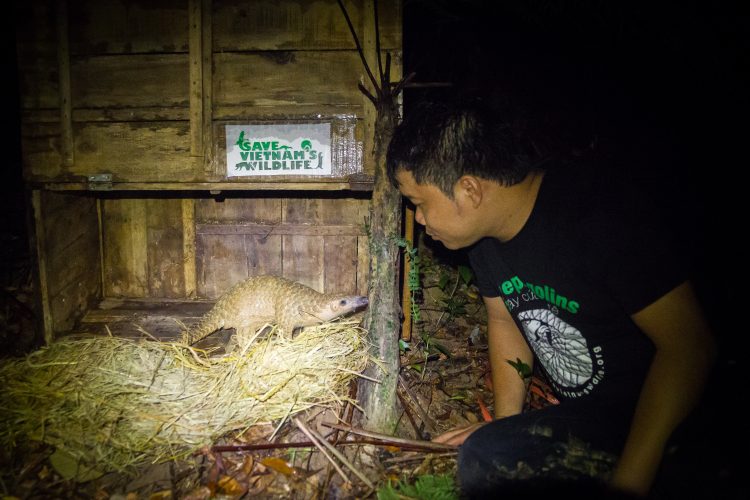
A new facility, the Pangolin Rehabilitation Center (PRC) was opened in late December near Phnom Penh in Cambodia to provide specialist care to the kingdom’s endangered pangolins. The facility was established by Conservation International together with the Cambodian Forestry Administration, to rehabilitate injured pangolins rescued from hunters – an increasing and serious threat to the survival of this species. The PRC also aims to raise awareness of their plight and what the public can do to help. There are already six pangolins under the center’s care, all victims of the wildlife trade, receiving treatment for a range of injuries. For more information visit: http://pangolinrehabilitationcenter.weebly.com/
——————————————————————————————————————————
PangolinSG gearing up for 2013 in light of recent seizures (13/1/2013)
Last year ended badly for pangolins with multiple seizures in December 2012, one of which comprised over 2,000 pangolins, which were seized in China having been exported from Malaysia. However, the PangolinSG has a range of initiatives planned for 2013, as it aims to raise awareness of the conservation predicament of pangolins, catalyse research action and devise conservation strategies for the species. Details of the groups initiatives are outlined in the below journal article.
——————————————————————————————————————————
New publication discusses intercontinental trade threat to African pangolins (12/11/2012)
A new publication by Co-Chair of the IUCN-SSC PangolinSG, Dan Challender and member of the PangolinSG, Lisa Hywood, in the latest TRAFFIC Bulletin, gathers available evidence and discusses the threat to African pangolins from intercontinental trade to Asia. This trade trend is one that was predicated some years ago but to date has been subject to little investigation. To read the full article, follow the below link.
——————————————————————————————————————————
New BBC Natural World Special: Sunda Pangolin picked for Attenborough’s Ark! (4/11/2012)
In a new BBC Natural World Special Sir David Attenborough has chosen ten species he would ‘save’ by taking aboard his own ‘Ark’. Among the species chosen is the Sunda Pangolin, which is distributed throughout Southeast Asia. As well showcasing the ten different species, the programme highlights work and research being conducted to conserve each species.
In the case of the Sunda Pangolin, this includes the work of IUCN-SSC PangolinSG members. The programme is to be broadcast on BBC2 at 9pm on Friday 9th November and repeated on the same channel on Saturday 10th November at 7.30pm. For clips and more about the programme from the BBC, click here.
——————————————————————————————————————————
New publication sheds light on exploitative threat to Indian Pangolin in Pakistan (13/10/2012)
Published in the Pakistan Journal of Zoology, author Tariq Mahmood and colleagues report on the targeted threat to the Indian Pangolin in Pakistan over a period of almost eighteen months from January 2011 to May 2012. In this period a total of 118 Indian Pangolins were killed for their scales which are suspected to have been used locally as well as traded internationally. The abstract of the paper can be found below. For a link to the journal click here, or the article, click here.
‘Indian pangolin (Manis crassicaudata) was recorded in Potohar region of Pakistan. From January 2011 to May 2012; 118 individuals were killed brutally including from districts Chakwal (n=60), Attock (n=25), Jhelum (n=19) and Rawalpindi (n=14). Nomads and local hunters have been found directly involved in the illegal trade of the animal with a selling price of Rs.10,000-15,000/- per animal (US$ 108 to 163) depending upon its size. The captured live pangolin is boiled in water tank to remove its scales, the rest of the scale-less dead body being thrown away. It is suspected that its scales have a high demand in the illegal local as well international markets; to be used in manufacturing bullet-proof jackets and in traditional Chinese medicines.’
Mahmood, T., Hussain, R., Irshad, N., Akrim, F. and Nadeem, M. S. (2012). Illegal Mass Killing of Indian Pangolin (Manis crassicaudata) in Potohar Region, Pakistan. Pakistan Journal of Zoology 44 (5) pp.1457-1461.
——————————————————————————————————————————
Pondering Pangolins in Nepal – Workshop on Chinese Pangolin Conservation (03/10/2012)
In August 2012, IUCN-SSC PangolinSG member and ZSL EDGE Fellow, Ambika Khatiwada, helped organise a one day workshop on the conservation of the Chinese Pangolin in Eastern Nepal. Attended by 44 participants comprising researchers, government officials and conservation organisations, it provided a platform for information exchange between these stakeholders as they look to tackle on-going, seemingly unsustainable trade in the Chinese Pangolin from Nepal. For more information, click here.
——————————————————————————————————————————
The IUCN World Conservation Congress took place in Jeju, Korea last week, connecting IUCN members with leaders from government, the public sector, environmental organizations, and the business world to debate and devise solutions for biodiversity conservation. For more information click here. Professor Jonathan Baillie, co-Chair of the Pangolin Specialist Group, launched this website to attendees.
As well as focusing on this website, Jonathan’s presentation covered the collection of data for a paper on the global status and trends of pangolins, collection of data to update the pangolin Red List assessments and the production of a monograph on all species of pangolin. He also reported on a small workshop in held in London in June to help develop the PangolinSG’s work plan and plans for a much larger meeting of all members in 2013. The presentation was well received and the Chair of the SSC was pleased to see the group had made such rapid progress since its formation in February of this year.
Later in the week the PangolinSG members present at the congress met up at the SSC Species Pavilion to say hello in person and to discuss new developments. A number of motions were passed at the congress relevant to pangolins, listed below. Jonathan said “Delegates at the IUCN World Conservation Congress welcomed the rapid development of the IUCN SSC Pangolin Specialist Group website and the determination of the group to halt the trade of this remarkable group of species”.
Motions passed relevant to pangolins include:
Halting the loss of evolutionary distinct lineages;
Implementing Aichi target 12 of the Strategic Plan for Biodiversity 2011-2020;
Conservation of tropical Asia’s threatened species; and
Supporting regional initiatives to conserve mammal diversity in West and Central Africa.
——————————————————————————————————————————
Ernanodon (Mammalia, Paleoanodota) represents early branch of the Pangolin family tree (17/9/2012)
A study in the Journal of Vertebrate Paleontology has revealed insights in the evolution of modern day pangolins. The study (click here) describes Ernanodon (Paleoanodota), a fossil Asian mammal, and suggests that Paleanodonta and Pholidota are sister groups. Ernanodon was previously only known from one specimen in China, until this specimen from Mongolia was found. The study concludes that Ernanodon represents an early branch of the pangolin family tree and despite being a dead end lineage it does shed light on the early evolution of today’s extant pangolins. Click here for more details.